
A strong foundation is one of the most important parts of any home because it supports the entire structure above it. When foundation problems begin, homeowners often notice small warning signs such as cracks, uneven floors, sticking doors, or water issues. While some foundation changes are normal as a house settles over time, certain problems can indicate deeper structural concerns that require professional attention.
Residential foundation repair focuses on restoring stability and protecting a home from further damage. The right repair approach depends on the type of foundation, the cause of the problem, soil conditions, and the severity of movement. Understanding the warning signs, repair options, and prevention methods can help homeowners make better decisions before minor issues become expensive repairs.
What Is Residential Foundation Repair?
Residential foundation repair is the process of correcting problems that affect a home’s foundation system. The foundation supports the weight of the building and helps keep walls, floors, and other structural elements properly aligned. Over time, factors such as soil movement, moisture changes, poor drainage, and construction issues can cause foundations to crack, settle, or shift.
Foundation repair does not always mean replacing the entire foundation. In many cases, professionals can stabilize damaged areas through targeted solutions such as crack repair, reinforcement systems, drainage improvements, or foundation leveling techniques. The goal is to address the cause of the problem and restore the structural performance of the home.
Common Causes of Residential Foundation Problems
Foundation issues usually develop because of changes happening beneath or around the home. Soil movement is one of the most common causes because many soils expand when they absorb water and shrink during dry conditions. These repeated changes can create pressure beneath the foundation and cause movement over time.
Water management also has a major impact on foundation health. Poor drainage, leaking gutters, improper grading, or water collecting near the foundation can weaken surrounding soil and increase the risk of settlement. Excess moisture may also contribute to basement leaks and foundation wall damage.
Other causes include plumbing leaks under concrete slabs, tree roots affecting soil conditions, improper construction, and natural settling as a home ages. Identifying the exact cause is essential because repairing visible damage without fixing the underlying issue may only provide a temporary solution.
Warning Signs Your Home May Need Foundation Repair
Foundation problems often reveal themselves through changes throughout the house. One of the most common signs is the appearance of cracks in foundation walls, floors, brickwork, or interior walls. Small cracks may not always be serious, but cracks that continue growing, become wider, or appear alongside other issues should be inspected.
Many homeowners also notice doors and windows becoming difficult to open or close. This can happen when foundation movement changes the alignment of the home’s frame. Uneven floors, gaps between walls and ceilings, or spaces appearing around window frames may also indicate possible foundation movement.
Basement homes may experience additional warning signs, including water intrusion, bowing walls, or visible separation in foundation materials. Paying attention to these early indicators allows homeowners to address problems before they affect larger parts of the structure.
How Professionals Inspect Foundation Damage
A proper foundation repair process begins with a detailed inspection. Professionals examine both the inside and outside of the home to understand the type of damage and determine whether the issue is cosmetic or structural.
During an inspection, experts look at cracks, settlement patterns, drainage conditions, soil around the property, and other factors that may contribute to movement. Some situations may require additional evaluation, such as measuring foundation levels or reviewing construction details.
A reliable repair recommendation should explain why the damage occurred and why a specific repair method is appropriate. Every home is different, so a solution should be based on the property’s individual conditions rather than a one-size-fits-all approach.
Common Residential Foundation Repair Methods
The repair method used depends on the type of foundation problem. For minor cracks that allow water entry, professional sealing methods may help prevent moisture problems and protect the foundation from further deterioration.
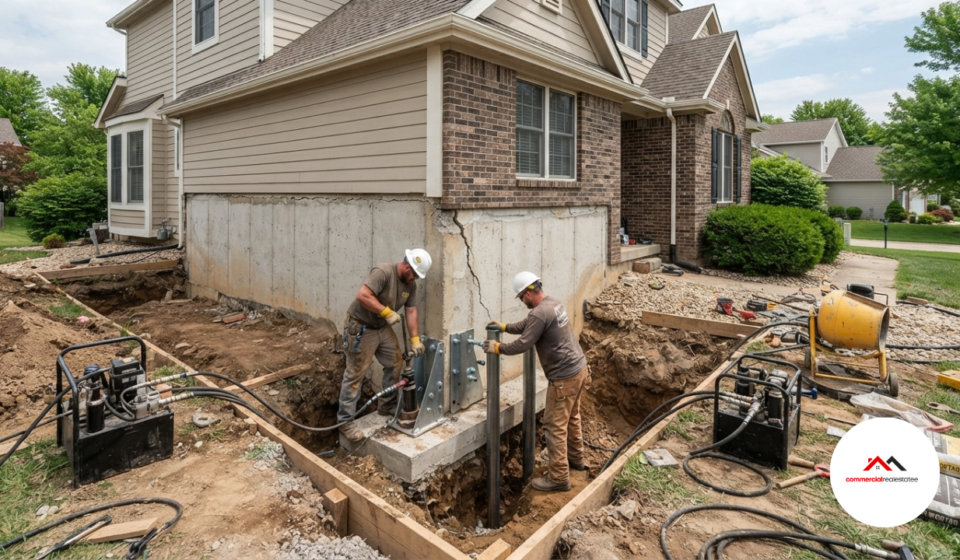
Homes experiencing settlement may require stabilization methods designed to support areas that have moved. Pier systems, including steel piers or helical piers, are often used when additional support is needed beneath the foundation. These systems help transfer the weight of the structure to stronger soil layers.
For concrete slab foundations, repair options may include leveling techniques or other solutions designed to correct uneven areas. Basement walls with movement may require reinforcement systems to improve stability and reduce further shifting.
Choosing the correct repair method requires understanding the reason behind the damage. A repair that works for one property may not be suitable for another because soil conditions, foundation design, and environmental factors vary.
Residential Foundation Repair Cost Factors
The cost of foundation repair depends on several factors, including the size of the problem, repair method, foundation type, and accessibility of the damaged area. A small crack repair will usually require less work than a project involving major settlement or structural reinforcement.
Additional factors such as drainage improvements, excavation requirements, and soil conditions can also influence the final cost. Because every foundation repair project is different, homeowners should be careful with estimates given without a proper inspection.
A professional evaluation helps homeowners understand what needs to be repaired, why it needs to be repaired, and what long-term results they can expect from the work.
How Long Does Foundation Repair Take?
The timeline for residential foundation repair depends on the complexity of the project. Simple repairs may be completed within a short period, while larger stabilization projects can require more time because they involve specialized equipment and structural adjustments.
Weather conditions, property access, inspection requirements, and the repair method can all affect the schedule. Before work begins, homeowners should receive a clear explanation of the expected timeline and the steps involved.
How to Prevent Future Foundation Problems
Maintaining a healthy foundation starts with managing water around the home. Proper gutters, functioning downspouts, and good drainage help prevent excessive moisture from collecting near the foundation.
Homeowners should also monitor changes around the property, including new cracks, water issues, or changes in doors and windows. Addressing plumbing leaks quickly and maintaining consistent soil conditions can reduce the risk of future foundation movement.
Regular inspections can also help identify potential concerns early. Foundation problems are often easier and less expensive to address when they are discovered before significant structural damage occurs.
Choosing the Right Foundation Repair Company
Selecting a qualified foundation repair company is an important step because the quality of the diagnosis and workmanship can affect the long-term outcome. Homeowners should look for companies with experience handling similar foundation problems and providing clear explanations of their repair recommendations.
A trustworthy contractor should focus on finding the actual cause of the problem instead of only offering quick cosmetic fixes. Comparing repair plans, understanding warranties, and asking detailed questions can help homeowners choose a solution that protects their investment.
Frequently Asked Questions
How do I know if my home needs foundation repair?
Signs such as growing cracks, uneven floors, sticking doors, water problems, and visible foundation movement may indicate a need for inspection. A professional evaluation can determine whether repair is necessary.
Are foundation cracks always a serious problem?
No, some cracks are caused by normal settling and temperature changes. However, cracks that expand, continue appearing, or occur with other structural issues should be checked.
Can foundation problems be fixed permanently?
Many foundation problems can be successfully repaired when the correct solution is applied and the original cause is addressed. Proper drainage and maintenance also help protect the repair.
How long does residential foundation repair usually last?
The lifespan depends on the repair method, soil conditions, workmanship, and maintenance. A properly designed repair can provide long-term stability.
Should I repair foundation problems before selling my home?
Repairing known foundation issues can improve buyer confidence and prevent complications during inspections. Professional documentation of completed repairs can also help explain the work performed.
Conclusion
Residential foundation repair is an important part of protecting a home’s safety, value, and long-term condition. Small warning signs should not be ignored because early attention can prevent more serious damage.
The best repair approach begins with understanding the real cause of foundation problems. A professional inspection, suitable repair method, and proper maintenance plan can help keep a home stable for many years.
For homeowners, the goal is not simply fixing visible cracks or damage. It is creating a lasting solution that protects the structure from future foundation challenges.